Nanjankud

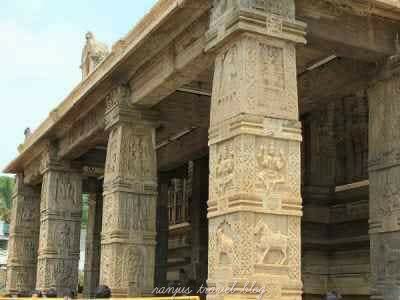
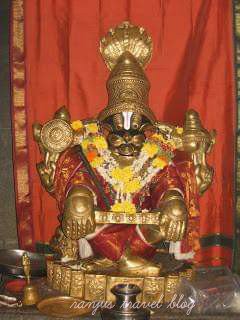
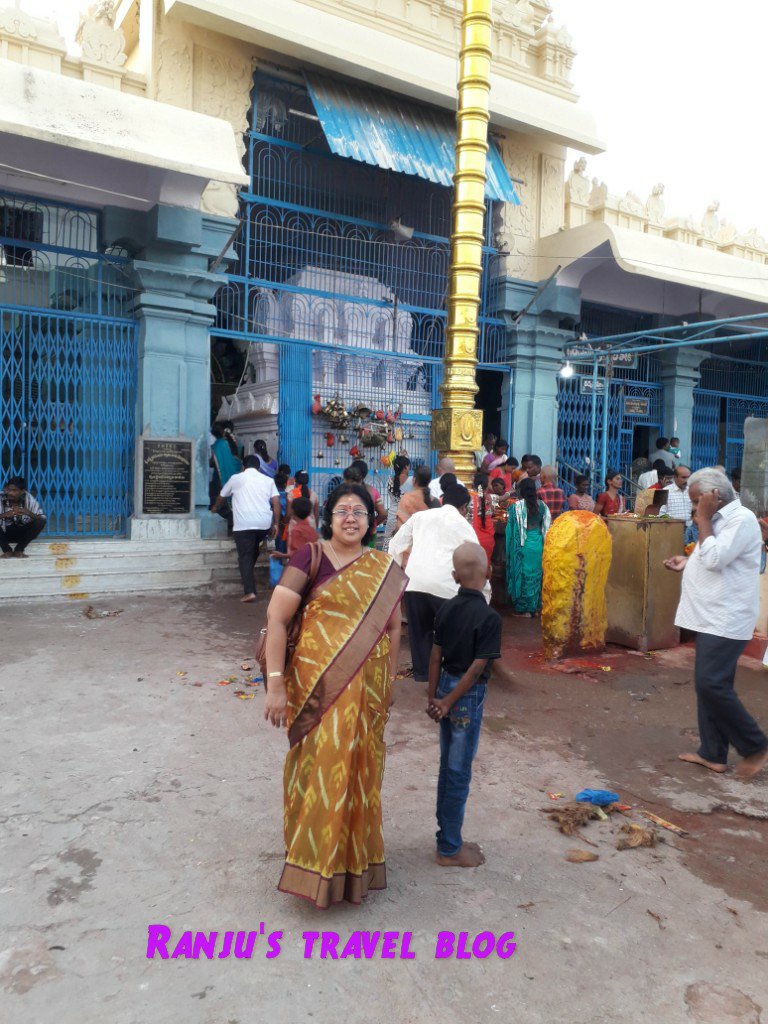
Nanjangud officially known as Nanjanagudu is a City and Taluk in Mysore district in the Indian state of Karnataka . Nanjangud lies on the banks of the river Kapila (Kabini), 23 km from the city of Mysore . Nanjangud is famous for Srikanteshwara Temple . Nanjangud is also called “Dakshina Kashi” 

The Srikanteshwara Temple at Nanjangud is dedicated to the Hindu supreme deity Shiva, also called Sri Nanjundeshwara, (“The Lord who drank poison”) to save the earth. In Hindu mythology, the Devas and asuras churned the ocean (parkadal)for the nectar (amrutham) for longevity .

As per legend the sage Gautama stayed at Nanjangud and offered puja to the Shiva Linga, known as Srikanteshwara or Nanjundeshwara. The town attained holiness because of the “sangam” where the Gundlu and the Kapila join. The spot is called Parusharama Kshetra where the sage Parushurama is said to have been recompensed for the sin of decapitating his mother.

Nanjangud, also called as “Dakshina Kashi” (Southern Kashi)

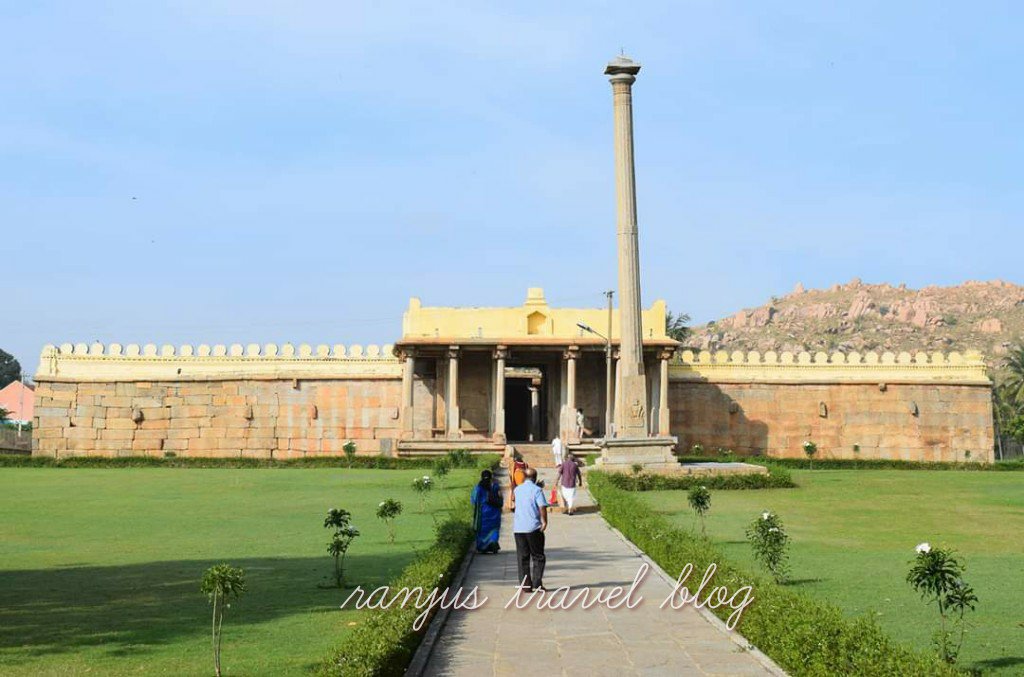
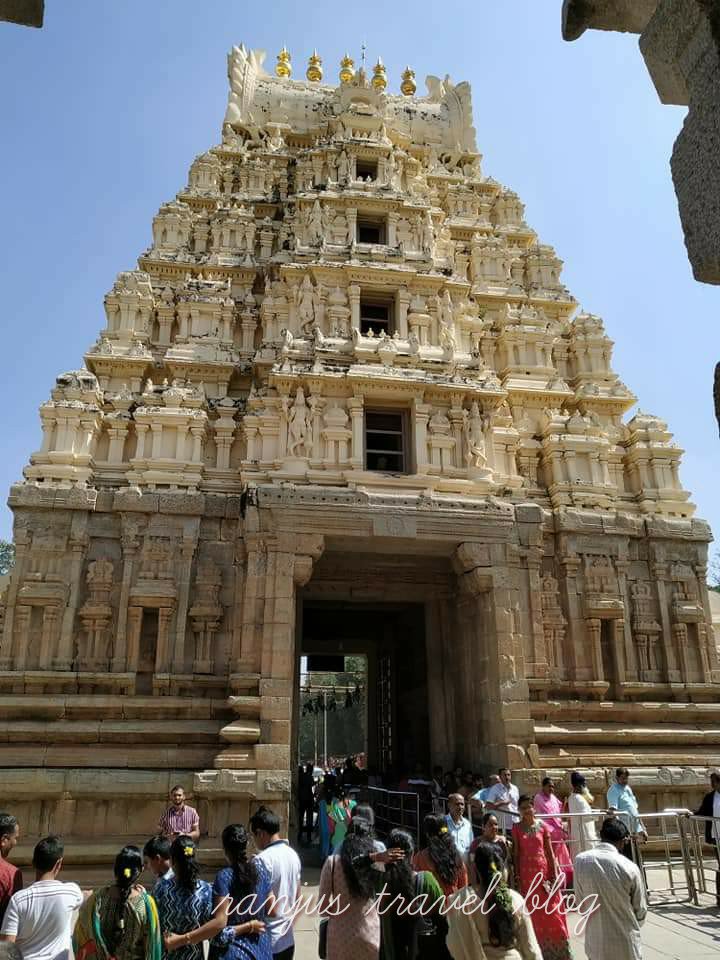
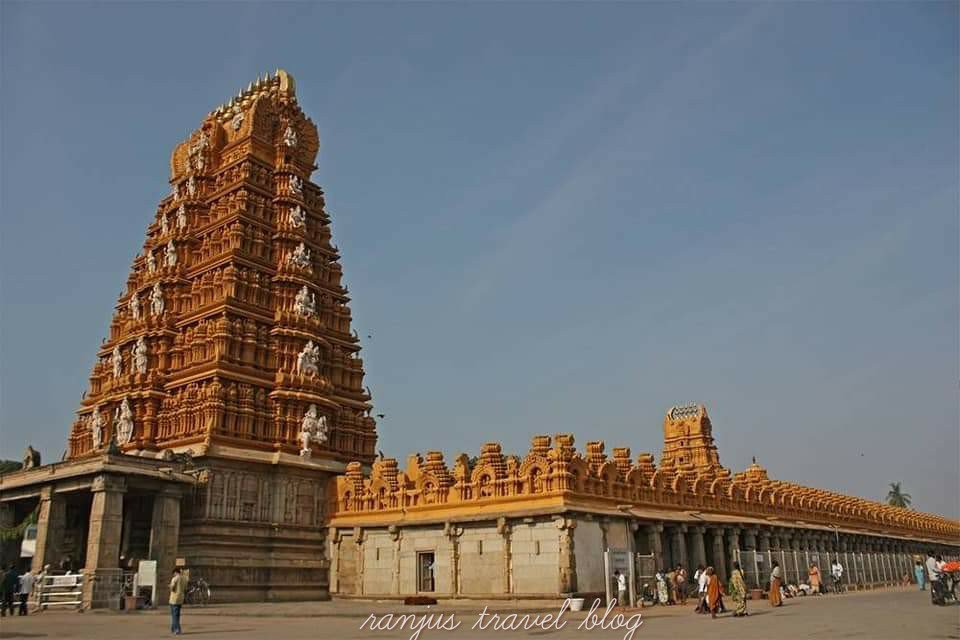
Enclosed within a gigantic prakara its Dravidian stucco gopura is impressive. The small square garbhagriha with its cylindrical pillars in the antarala were built in the Ganga period of about ninth century. The mandapa in front of the original sanctum has lathe turned Hoysala pillars of 13th century. The dancing Ganapati is also a Hoysala sculpture. To the left of the main shrine is a shrine of Narayana and behind is a shrine for Chandikesvara. To the northwest of this is the Parvati shrine with a pillared sabhamandapa. The Parvati and the Narayana shrines as the gopura are the creations of the Vijayanagara period. To the right of the main shrine is a small shrine of Subramanya seated on the back of a peacock with seven-hooded Naga. The main shrine has a stucco sikhara of the Vijayanagara period. Mysore Wadeyars also made additions to the temple. The nine storied tall gopura of the Dravidian type was built by queen Devajammanni, queen of Krishnaraja Wadiyar III in 1849. Opening to the courtyard is a shrine for Nandi that is about 6 feet in height, donated by Dalavoy Vikramaraya. Another attraction is the huge stone bull which is 8ft in height. This was established by Dalavayi Vikramaraya in 1644. In its front is the Tulabhara mantapa. The ritual of weighing the devotees against any commodity is done here. Commonly people balance themselves against rice, jaggery, sugar etc.

The Maharajas of Mysore used to be illustrious devotees of Nanjundeshwara . Jayachamaraja Wadiyar was a celebrated believer and used to visit the temple on Mondays. In actual fact the Srikantadatta Wadiyar seems to be a favor from this God. The sanctified Sivalinga which is more than a thousand year old continues to fascinate devotees from far and wide.

In addition to the main deity, there are many shrines for Goddess Parvathi, Ganesha, Nataraja, Sharada, Subramanya, Navagraha etc. The twelve-monthly fair (Jatre) takes place during March–April which attracts thousands of devotees. Half-a-century ago, there used to be a dining hall called Shivakuta, opposite the temple kitchen. The devotees used to be served prasada here. Many old women used to take prasada here daily. Some of them had taken a vow not to use a plate or a leaf but to eat on the floor. This Shivakuta is not there today. Instead a luxurious dining hall is present .

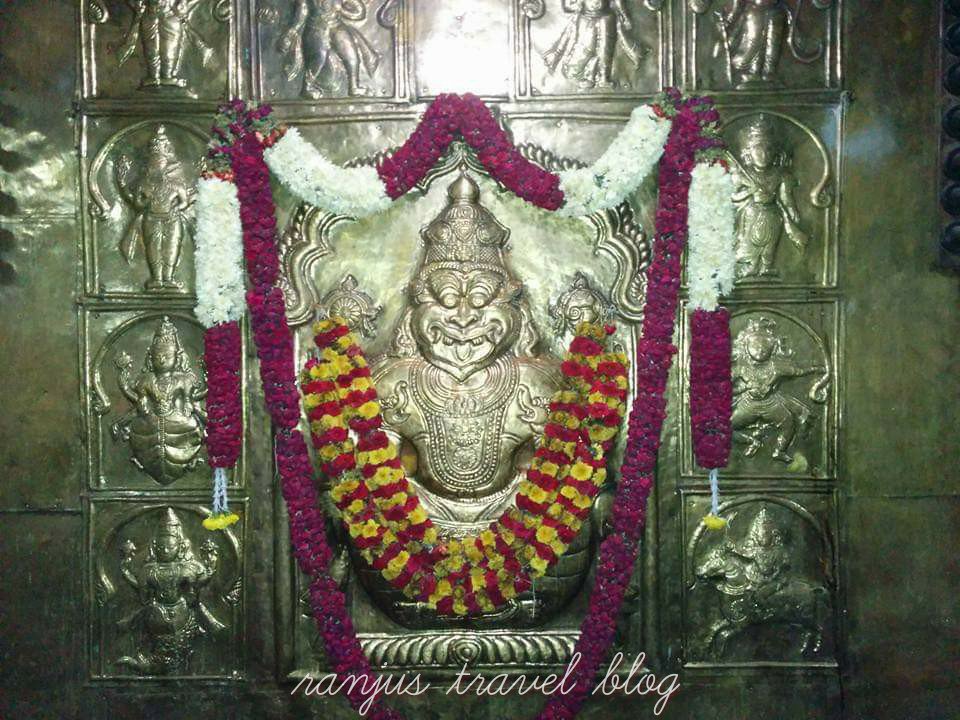
The vast prakara has decorated niches that house 122 images in all including Dikpalas, Virabhadra, Dakshinamurti, Tandavesvara and Lord Shiva in various aspects, Ganapati, Saptamatrika etc. The linga in the main garbhagriha is about three feet in height, to which worship is offered. The Goddess Parvati image is about five feet in height and it is a beautiful sculpture of the early medieval period. Thus, the whole temple has a history of over thousand years starting from the tenth century. Krishnaraja Wadeyar III was a great patron of this temple and his statue with his queens is found in this temple. Traditionally this place is connected with Gautama and Parashurama and is on the banks of the sacred river Kapila. Even Hydar Ali and Tipu Sultan are said to have made some grants to this temple. According to popular belief, Tipu’s elephant got afflicted by an eye-ailment and no doctor (hakim) was able to heal it. Somebody suggested that he should pray to Sri Nanjundeshvara which he did. A wonder happened and the elephant’s eye was cured and impressed by this, Tipu called the god Hakim (doctor) Nanjunda. He gifted an emerald green Linga to the deity.

Lakhs of devotees flock to this temple during Dodde Jathra festival to get the divine dharshan and blessings of Lord Shiva .

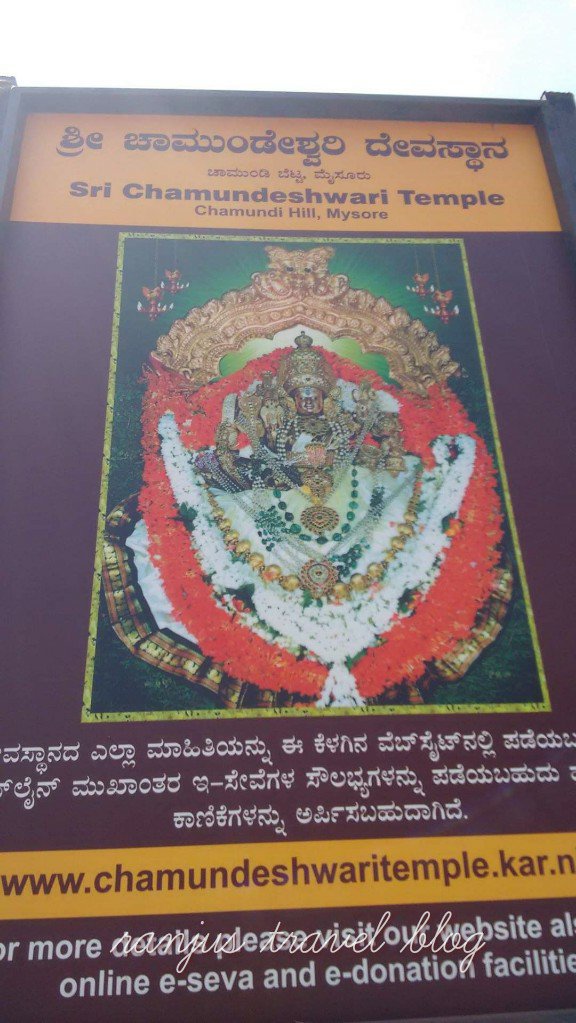
Sri Chamundeeswari temple

Every year when we go to see my sister in law in Bengaluru from Chennai , we make it a point to visit some temples . As a friend of mine suggested to go to Mysore and listed me some of the temples she went .

After visiting my sister in law we went to satellite bus top in Bengaluru and took a bus to Mysore and put up our stay near Jagan Mohan Palace .

As we reached by afternoon had late lunch by 2pm and took a room near by and took rest and by evening 5pm we got freshened up and enquired about the bus stop there and took a Volvo bus to Chamundi Hills . Every 10 minutes there is a bus to Chamundi Hills .

Sri Chamundeshwari Temple, Mysore, Karnataka is one among the Shakthi peedams.

This temple dedicated to Chamundeshwari Devi is located atop the Chamundi hills in Mysore, Karnataka. The temple is counted among one of the Maha Shakti Peedas where the hair of Sati Devi fell after her dead body was cut into many parts by Lord Vishnu’s Sudarshana Chakra. It is said that the demon Mahishasura was killed by Chamundeshwari Devi here on the tenth day after fighting with him for nine days. Thereafter, the town came to be called Mahishasurana Uru (the town that Mahishasura belonged to). Later, the name shortened to Mahisur or Mysuru which got anglicized as Mysore. The Skanda Purana refers to a sacred place here by the name Trimuta Kshetra which is surrounded by eight hills and Chamundi hills is one among the eight hills which was earlier known as Mahabaladri in honor of Lord Shiva who resides in the Mahabaleshwara Temple, which is the oldest temple in the hills.

As per local belief, the Deity was consecrated by Sage Markandeya.
The Deity being ashta bhuja i.e. having eight hands is in a sitting posture. The temple which is said to be 1000 years old and a small shrine earlier acquired importance after the Wodeyars came to power. Chamundeshwari Devi became the tutelary Deity of the Wodeyar Royal family and the presiding Deity of Mysore. The temple as seen today in it’s glory was expanded during their reign.

The Mysore Dasara is the most famous and important festival celebrated here to mark Navaratri and Vijayadashami. The festival celebrations have been led by the Wodeyar Royal family for more than 400 years. The festival is so famous that apart from Indians, many foreigners reach Mysore on the Vijayadashami day to witness the festivities.

On the day of Vijayadashami, the festival begins with a Nandi Dhwaja puja at noon which is followed by the Jambu Savari of Chamundeshwari Devi who is regally seated on a decorated elephant. The ride begins from the Mysore Palace amidst a huge procession during which the city comes to a standstill and finally ends at the Bannimantap ground. The Royal family worships the Banni tree here as it is believed that the Pandavas hid their weapons in this tree during the last year of their exile. The conclusion of the festival begins with the torch light parade in the Bannimantap ground during the evening.

There is a huge granite Nandi on the 700th step on the hill in front of a small Shiva temple a short distance away. This Nandi is over 15 feet high, and 24 feet long and around its neck are exquisite carved bells.

The shrine of Mahabaleshwara is located close to the Chamundeshwari temple, but does not receive much crowd like the Devi shrine. As a matter of fact, the shrine of Mahabaleshwara is much older than the shrine of the goddess. Here the linga is embedded with a face of Lord Shiva .
In front of the demon statue
15 feet Nandi
Main deity picture
Temple Gopuram
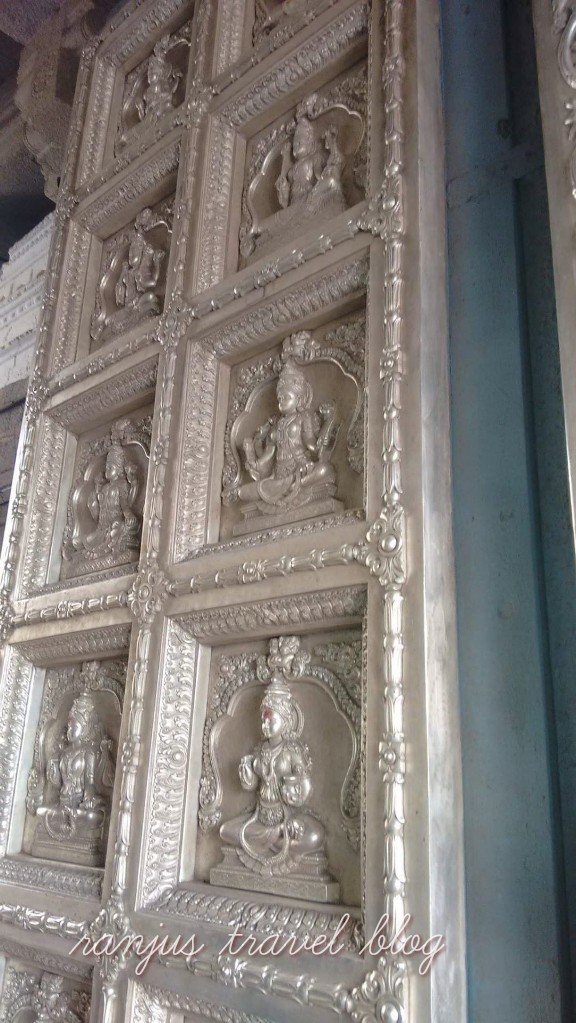
Carved doors with silver
Silver carved doors

Sri cheluva Narayana Perumal Melkote

From Thondanur we travelled to Melkote.

Sri Ramanuja stayed here for 12years during his exile from Srirangam and consecrated the temple laying down detailed processes for poojas
Selva Pillai Sampath Kumaran’s Vaira Mudi Utsavam in Panguni is a must see at this temple.

This place is also called as Thiru Narayanapuram and is referred to as ‘Dakshina Badri’.

Located about 35kms North East of Srirangapatna on the banks of the Cauvery in the Pandavapura Taluk-Mandya District of Karnataka at the foot of the Yadava Giri is one of the most sacred and historical Vaishnavite temples – the Thiru Narayana Perumal Koil in ThiruNarayanapuram (now Melkote), one that dates back to the Kretha Yugam. Brahma’s sons Sanatkumaras brought their father’s pooja idol ‘Lord Narayana’ and installed it at Melkote.

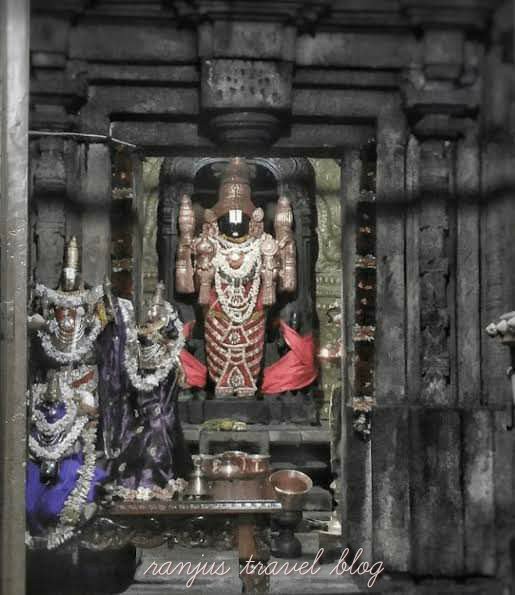
An interesting feature at the Thiru Narayanan temple is that there is a separate sannidhi for the Utsava deity, ‘Selva Pillai’ (Sampath Kumaran) not seen anywhere else. Only one day in the year, both Moolavar and Utsavar deities are seen together at this temple to celebrate the home coming of Selva Pillai Sampath Kumaran (Photograph below)

The Story- Ramanuja consecrates the temple
Driven out of Srirangam by the chozhas, Ramanuja came to a place called Thondanur (Bhaktha Puri) near ThiruNarayanapuram .The daughter of the Jain King Bitta Deva, who was ruling the region with Thondanur as his headquarters, had developed a disease. Using his powers, Ramanuja cured the king’s daughter.

Later, Ramanuja found himself short of Thiruman (the special thick white ash that Vaishnavites wear on their fore head). That day Lord Narayanan appeared in his dreams and informed him that he was residing in a pit in a hill nearby and that the Thiruman he is looking for can also be found there.

With the help of Bitta Deva, Ramanuja came to Thiru Narayanapuram and located the moolavar lord and performed consecration of the temple.

Legend 1 of the Utsava deity as Rama Priyan
After Lord Rama had given his pooja idol, Ranganatha, to the newly crowned Lankan King Vibheeshana, He was left without an idol for his daily poojas. Brahma is said to have provided this idol to Rama. Later, Rama passed this on to his sons Luva and Kusha. When Kusha’s daughter got married to a Yadava prince, this idol was given as part of the gifts to be given by the Bride and thus this idol landed up in the lunar dynasty from the solar dynasty.

Years later, when Balarama came to this place on a religious trip, he found the moolavar deity resembling the idol at his home, back in Dwaraka. Krishna and Balarama came back to this place with the idol and they decided that this was the ideal Utsava deity for Thiru Narayanan and placed it here. The Utsava deity having been Rama’s pooja idol was called ‘Rama Priyan’.

Legend 2 of Rama Priyan becoming Selva Pillai
Coming back to Ramanuja, while he was happy to have found the moolavar deity of Thiru Narayanan, Emberumaanar was keen to have regular festivals at this temple round the year. However, he found he could not do this as there was no Utsava deity, the processional idol.

Once again, the Lord came in his dreams and suggested that his utsava idol was now under the custody of a sultan king. Immediately, Ramanuja approached the king briefing him of the situation at the temple. The king asked Ramanuja to identify his idol amongst the many that the king had taken custody of. Unable to find his Lord, Ramanuja spent the night there. The next morning he called out ‘Adiyen Vareeren Enthan Selva Pillai’ and like a small child, the lord ran up to Ramanuja, from the chamber of the princess, and sat on his lap.

Delighted at finding the processional deity, Ramanuja brought the Lord back to Thiru Narayanapuram. With the Lord having reacted to Ramanuja’s call of ‘Selva Pillai’, the name stuck and from that day, Rama Priyan came to be called ‘Selva Pillai. Unhappy at the departure of her favourite Lord, the princess followed suit and joined Selva Pillai at Melkote and she is said to have remained there ever after serving at the feet of the Lord.

Having found the Utsava deity, Ramanuja stayed here for 12 years and set up processes for daily poojas, rituals and annual festivals.

The Goddess name is Yadugiri Nachiyar and every Friday thirumanjanam is being done within 1pm .

There is a yoga Narasimhar temple on a hillock .The idol is installed by Prahlad himself and one has to climb about 500 steps from chelva narayana temple .

Now roads have been put and only about 250 steps we have to climb cars are allowed half way through.

Yoga Narasimha temple is on a small hillock, there are steps that lead to this temple. There is a road that leads to half way of the hillock which is driveable, that will reduce the no. of steps to climb. The view from the hill is very scenic and green. I would suggest to first visit Cheluva narayana swamy temple, and go to Yoga narasimha swamy temple at around 5PM. Weather gets very pleasant around this time. The sunset is also beautiful.

Melkote Thirunarayana Swami Temple
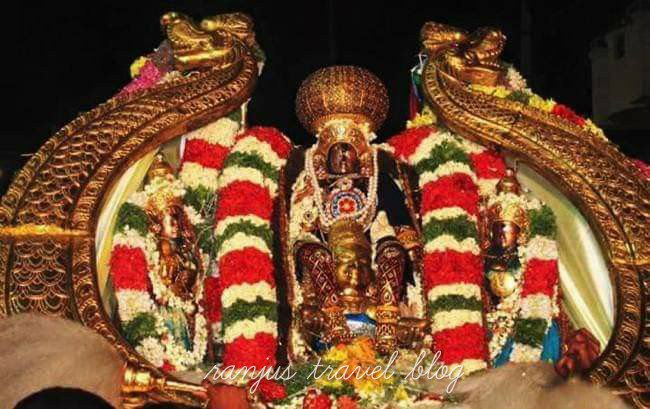
Vairamudi Sevai is one of the most important ceremony celebrated in this temple. Devotees flock from all over to see this event .During this festival the streets of Melkote are decorated in his honour.The procession of the Lord’s idol is carried on a golden garuda, along with idols representing his divine consorts Sridevi and Bhudevi. The procession takes place at night and continues until dawn. The festival is named for the legendary diamond studded crown, the Vaira Mudi which the Lord only wears during this procession. For the rest of the festival the Lord wears the Rajamudi, another crown studded with precious stones .

Cheluvanarayana swamy temple
Side view
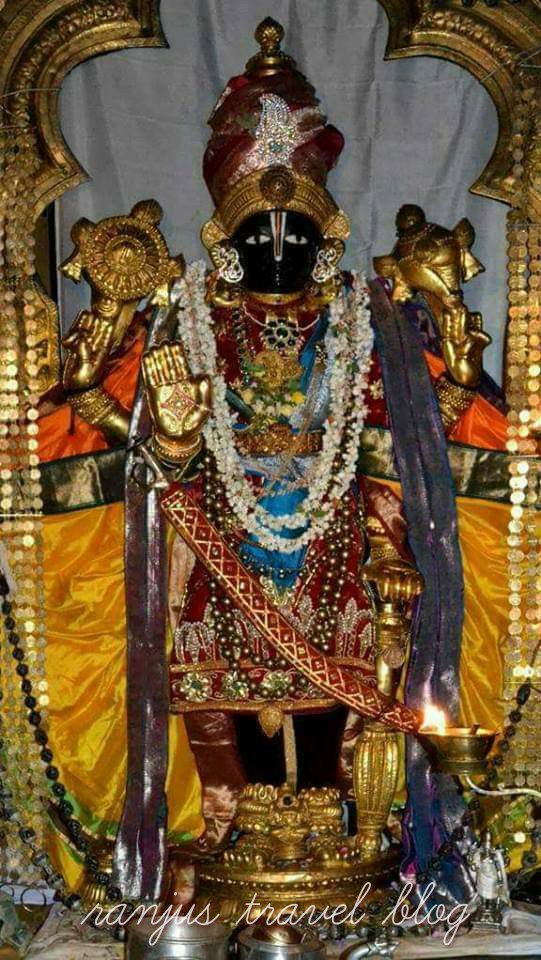
Picture of the main diety
Picture of procession diety
Yoga Narasimhar this is a arch while going up the Hill the main idol is of granite
Sri Ramanujar
Melkote Yoga Narasimhar pic courtesy Temple Connect page of Facebook

Small Stories #23

A BEAUTIFUL WAY OF LOOKING AT THINGS:

A Father was reading a magazine and his little daughter every now and then distracted him. To keep her busy, he tore one page on which was printed the map of the world. He tore it into pieces and asked her to go to her room and put them together to make the map again.

He was sure she would take the whole day to get it done. But the little one came back within minutes with perfect map……When he asked how she could do it so quickly, she said, “Oh…. Dad, there is a man’s face on the other side of the paper….. I made the face perfect to get the map right.” She ran outside to play leaving the father surprised.

MORAL OF THE STORY:

There is always the other side to whatever you experience in this world. Whenever we come across a challenge or a puzzling situation, look at the other side…. You will be surprised to see an easy way to tackle the problem.
Life is short, energy limited, with this limited energy we have to find the unlimited; with this short life we have to find the eternal. Don’t waste it with unimportant matters

Sri Nambi Narayana Perumal Thondanur

From Srirangapatna we travelled to Thondanur.

It’s in Mandya district sugarcane and paddy field all over with chill breeze .

The temple is in a calm serene atmosphere .

This temple being one of the abhimana sthalams was built by Lord Indra .

At the end of the Dwapara Yuga, in the Sura Sura war, Indra was afflicted with Brahma Hathi Dosham. To liberate himself from this, he undertook penance and invoked the blessings for Lord Vishnu.

He was directed to install 5 Narayana Idols in this region to liberate himself from his dosham. Thondanur is the first and the oldest of the Pancha Narayana Kshetrams.
The kshetrams are :
Nambi Narayana at Tondanur
Keerthi Narayana at Thalakad
Chennakeshava(Vijaya Narayana) at belur
Sowmya Narayana at nagamangala
Veera Narayana at gadag .
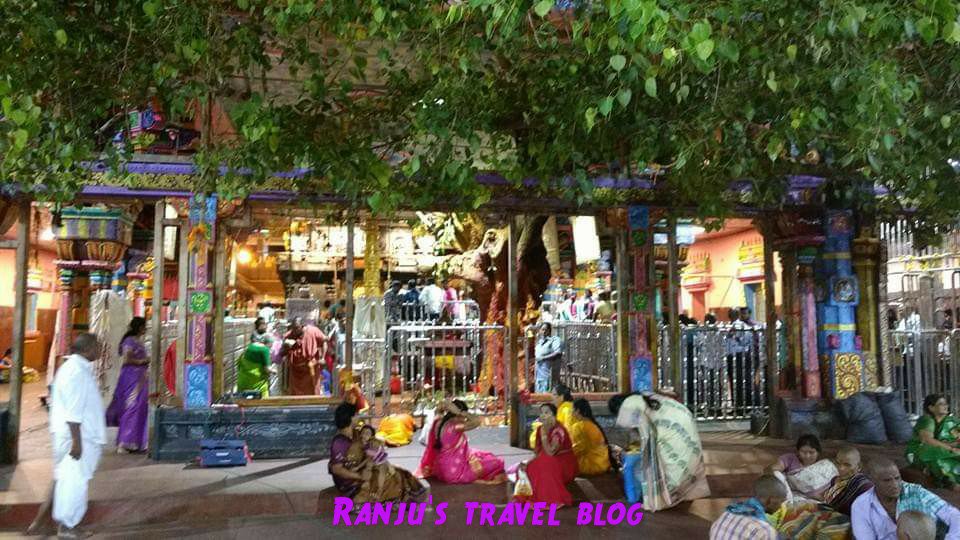
Belief is that one will attain Vaikunta Moksham if we visit the Pancha Narayana Kshetram.
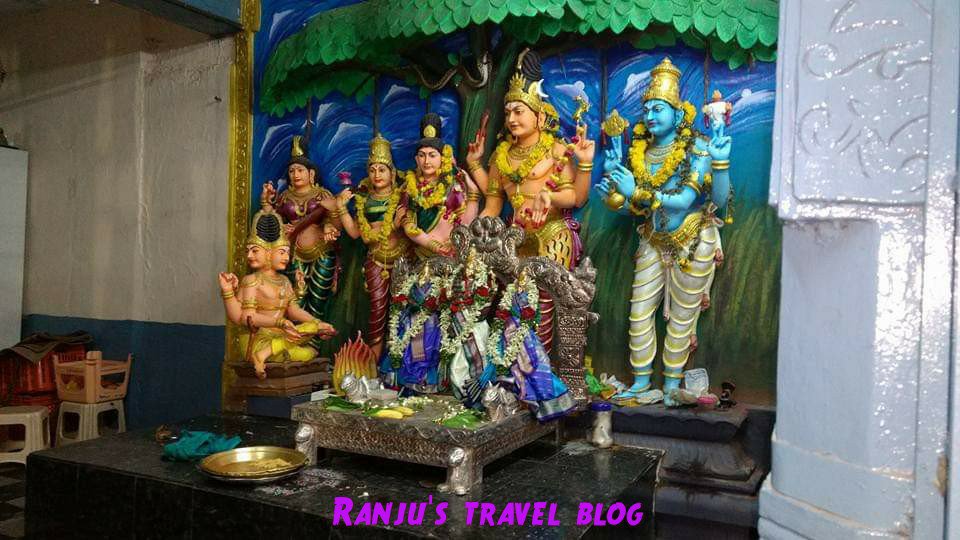
Opposite to Nambi Narayana Perumal temple is Gopalakrishna temple , at a small hillock near by is Sri Ramanujar and Lord Yoga Narasimhar temple near kere Thonnur . (Bank of lake thonnur)

First when we enter the temple there are pillars leading to Goddess Aravinda nayaki shrine . The dwajasthambam of this temple appears to look to the side from outside and center when seen from inside the temple . There is a backside gate which those days Kings used to come now it is kept locked The other side of this gate is koshala . Backside of this temple is a well and it is said echo can be heard if we clap or make noise the other side of the pragharam is yagasalai (yagnas are done) and madapalli (food for offering God is prepared here). There is a seperate idol for Lord Ramanujar as well as his Thiruvadi with His disciples . Idols of Sri Vedanta Desikacharya and foremost disciple of Sri Ramanujar Nambi Narayana are also inside the temple .

While the temple was renovated by Ramanuja during his exile from Srirangam, the idol and the sanctum is said to be over 5500years old and dates back to the Dwapara Yuga. Ramanuja built new mandapas outside the sanctum and renovated and consecrated the temple.

Bittideva a Jain King brought his sick daughter to Sri Ramanujacharya for cure , Ramanujar asked the daughter to have a holy dip in the thonnur lake and hit her head with the dandam of Yoga Narasimhar and relieved her from the evil spirit . Thus a holy dip in thonnur lake is also considered as sacred .

When asked what he wanted, Ramanuja informed the king that he was here to propagate Vishistaadvaitha and that he would like the King to convert to a Vaishnavite.

Bitti Deva, much against the wishes of his people, became a Vaishnavite and changed his name to Vishnu Vardhan reasoning out to his people that in this Kali Yuga, Ramanuja was the avathara of Sesha (similar to how Lakshmana was in the Tretha Yuga).

An unhappy lot, the 1000 Jains of Thondanur wanted to confront Ramanuja in a debate. Outside the Yoga Narasimha Temple, after Ramanuja invoked the blessings of the Lord, he was thrown 1000 questions by the people of the kingdom. And in one go Ramanuja hit back at them with 1000 answers much to the delight of the people. Pleased with his answers, the Jains converted to Vaishnavism.

Near by in a small hillock is a temple for Sri Ramanujar and Lord Yoga Narasimhar. One has to climb about 16 steps .

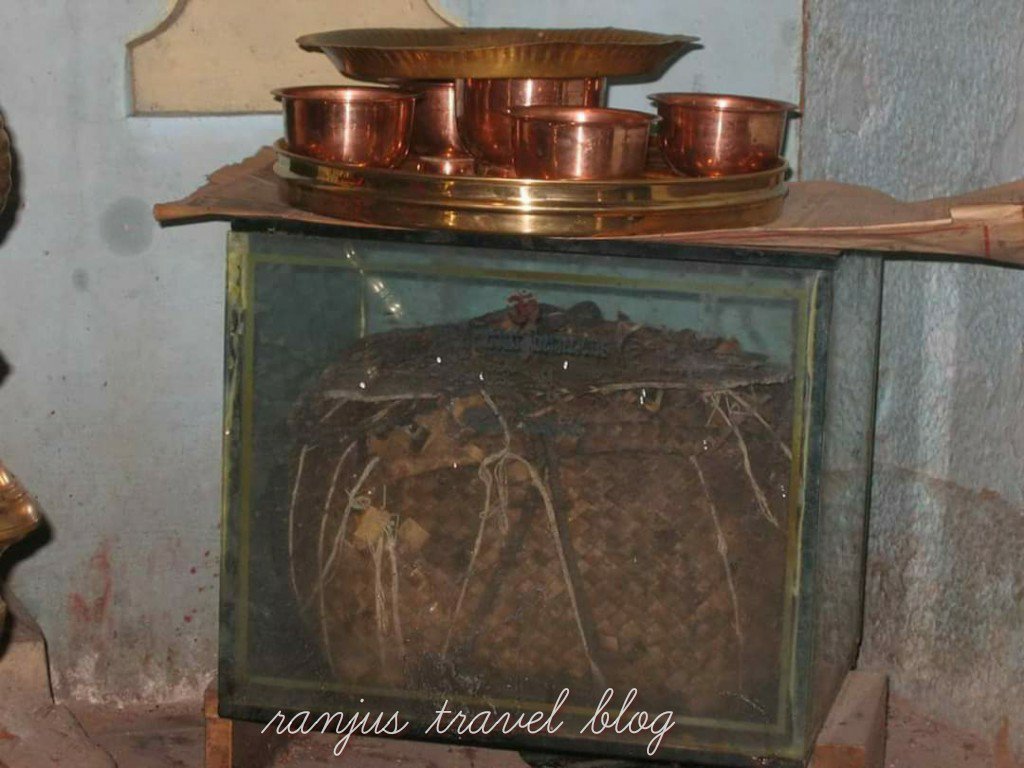
Here Sri Ramanujar is in the form of Adiseshan roopa .The Dandam of Yoga Narasimhar which Sri Ramanujar used to cure Bittideva’s daughter is still present in this temple and a basket which Sri Ramanujar used for bringing flowers is preserved in a glass box .

Belief is that Lord Yoga Narasimha fulfils all the prayers of the devotees here at this temple. Once fulfilled, the devotees present a 10×6 Veshti to Yoga Narasimha and an Orange Veshti to Ramanuja at this temple as a thanks giving gesture. 

Nambi Narayana Perumal temple
About the temple
Nambi Narayana Perumal
Sri Ramanujar
Yoga Narasimhar
Flower Basket of Sri Ramanujar

Sri Ranganathar Srirangapatna

Srirangapatna Ranganathaswami Temple at Karnataka .

Srirangapatna known to be the historical capital of warrior kings Hyder Ali and his son Tipu Sultan, is a town of Mandya district, a highly sought after destination in Karnataka for it’s magnificent temples and monumental forts. Located 16 kilometers from the beautiful city Mysore, this place is recognized for its rich cultural heritage. History has it that the forts hold stories of famous battles and also portrays Tipu Sultan’s history as a ruler. Tipu built palaces and forts so as to hold proof of him as a legend and powerful, undefeatable war hero.

Not many realize that Srirangapatna is actually an island surrounded by river Cauvery from all sides. This egg-shaped island is named after Sri Ranganatha, the presiding deity of the Sri Ranganatha Swamy temple.

Srirangapatna Ranganathaswami temple built in 894 AD is an abode to Sri Maha Vishnu, lord here is in a reclining position, resting over the coils of Adi Seshu (A seven head serpent). The reclining posture statue is said to be the largest murti of its kind in the state of Karnataka.

Srirangapatna Ranganathaswami Temple is one of the largest temples with a lofty tower. The Lord is reclining on Adi Sesha with the Goddess in His chest. The murti of sage Gautama and Goddess Cauvery are enshrined at the holy feet of the Lord.

Saints and Alwars are enshrined on the corridors. Two pillars in front of the inner entrance are called Chaturvimsati. The 24 forms of Vishnu with their names are engraved thereon. In the north-west corner is the shrine of the Divine Consort Ranganayaki Thayar and the sacred feet of the Lord. Pattabhirama with Sita and Anjaneya at His feet and Lord Rajamannar are wonderful sculptures. There is another Krishna shrine, which is very popular among the devotees. The murti’s of Srinivasa and Panchamukha Anjaneya, installed by Guru Vyasaraya, are noteworthy.

The other three temples are the Adi Ranga Temple (in Srirangapatna), the Madhya Ranga Temple (in Shivanasamudra) and the Antya Ranga Temple (in Srirangam). All these three temples are considered very important Ranganatha temples.

Nimishambal shrine Goddess Nimishambal is enshrined in an ancient Shiva temple (20 km from Mysore) on the banks of river Cauvery. The temple is dedicated to Lord Mouktikeshwara. Also enshrined in the temple is Lord Lakshminarasimha. The devout strongly believe that the Goddess helps them succeed in any step they take by invoking Her. Many devotees make a thanks-giving visit to this temple later.

Pic courtesy Temple Connect page FB

Nimishambal devi temple

Nimishamba Devi Temple Srirangapattana, Bengaluru – Karnataka .

Goddess Nimishamba is considered as the incarnation of Goddess Parvathi, the consort of Lord Shiva. This place Ganjam is considered as a holy place. Muktharaja of Somavamsha Aryakshatriya performed penance at Nimishamba Temple.

Shrichakra is carved on a stone in front of Sri Nimishamba and pooja is performed. There is a belief that Goddess Nimishamba is going to remove all the problems and troubles of her devotees within a minute. That is why she is called Nimishamba. Nimisha means a minute and Amba is the name of Parvathi. Somavamsha Aryakshatriya Mutharasa king Muktharaja was blessed with the boon that Sri Nimishamba will come to his aid in his fight against the demons in a minute. That is why there is a deity Lord Shiva by the name of Moukthikeshwara. This temple was installed at the time of Mummadi Krishnaraja Wodeyar about 300 to 400 years ago.

The temple of Nimishamba lies at a distance of two kilometers from Srirangapatna bus stand in the eastern direction beyond Tippu’s summer palace on the road leading to Sangam. The temple is at a higher elevation on the bank of the Cauvery and faces east. The river flows by at a lower level, and steps have been neatly cut on stone slabs to reach it. It is a small shrine with a seven-tiered Rajagopuram. Goddess Nimishamba’s sannidhi is to the right as one enters the shrine. It is a fine piece of an icon. She is beautifully bedecked with jewelry and garlands of red roses. In front of the Goddess is placed the Sri Chakra to which puja is done with kumkum by the priest. The devotees stand in rapt attention till deeparadhana is offered to the deity.

Adjoining the sannidhi of the Goddess is that of Lord Shiva, whose appellation is Aksheeswara. The icon is a small sized linga. The Nandi is proportionately small sized and is diagonally facing Lord Shiva. Only after offering `deeparadhana’ to Lord Shiva, it is offered to the Goddess. Adjoining this sannidhi is that of Lakshminarayana. All the three sannidhis are in a row. There are no suka nasi and Navaranga. There is only a mukha mantapa.

There is a big brass bell hanging from the ceiling, which is rung by the priest himself after placing the `bali bhojanam’ on the bali peetam for the crows to eat. Once the bell is rung, the crows come down to the bali peetam in an orderly way to partake it! It is indeed unique to this temple. There is a prakaram (closed precincts of a temple) for circumambulation. The Nimishamba temple has shot to fame recently for its instant granting of boons to those who pray here.

It would be of interest to note that marriage proposals which have been dragging on for years, get clicked immediately after visiting this shrine. It is probable that the temple might have been built during the reign of Raja Wadiyar I (1610-38 A.D.) who ascended the Mysore throne at Srirangapatna. Regular puja has been done for the last 50 years.

In front of the temple
The main deity picture
Banks of river kaveri

Small Stories

“An old man saw a scorpion drowning and decided to pull it out from the water. He calmly extended his hand to reach the creature. When he did, the scorpion stung him. With the effect of the pain, the old man let go the creature and it fell back into the water. The man realizing that the scorpion was drowning again, got back and tried to rescue it but then again it stung him. He let go of it again.

A young boy standing by, approached the old man and said, “Excuse me Sir, you are going to hurt yourself trying to save the evil-vicious creature, why do you insist? Don’t you realize that each time you try to help the scorpion, it stings you?”

The man replied, “The nature of the scorpion is to sting and mine is to help. My nature will not change in helping the scorpion.”

So the man thought for a while and used a leaf from a nearby tree and pulled the scorpion out from the water and saved it’s life.

MORAL LESSON:
Do not change your nature. If someone hurts you, just take precautions. Some pursue happiness while others create it. Let your conscience be your guide in whatever you do.”

Bhadrachalam

Bhadrachalam or Bhadradri, the temple is considered one of the Divya Kshetrams of Godavari and is also revered as Dakshina Ayodhya. According to the legend , Lord Vishnu appeared (Mount) Meru’s son Bhadra as Rama to answer the latter’s prayers.

We travelled from Vedadri to Bhadrachalam and reached by night .We stayed in Bharathi theertha Nivas . It was near the temple by early morning we took an auto to the temple and we paid Rs.10 per person .

We went in the early morning and did Thirumanjanam for this they charge Rs.150 per couple . We were allowed inside the main sanctum sat in front of the main deity .The main deity is Lord Ramar with his consort Goddess Seetha on His thigh and besides Him is Lakshmana . The main diety here is Swayambu (self manifested).

Legends speak of a severe penance Bhadra, the son of Meru, did in this sacred place to have darshan of Lord Vishnu. The Lord appeared before him and promised to stay at this place during Rama Avataar. Hence the place is known as Bhadragiri or Bhadrachalam.

When Sri Rama left Ayodhya on a 14-year vanvaas (exile), he along with Sita and Lakshmana crossed the Ganges and reached this area, then known as Dhandakaaranya. They preferred to stay in a place called Parnashala (32 km away) for its serene atmosphere. References are found to these events in the epic Ramayana.

The Lord is believed to have informed a woman by name Dhammakka in her dream that certain idols are lying at a particular spot on the hill. The devotee promptly picked up the idols (of Sri Rama, Sita and Lakshmana) and installed them in a place which is the site of the present shrine.

In later years, Ramadas, an ardent Rama devotee who was Gopanna by birth, renovated the temple. There is an interesting incident associated with this development. Gopanna was serving the then Sultan Tanashah as his Tahasildar. Being a Rama bhakta, he utilised revenue collections, to the tune of Rs 6 lakh, to renovate the temple. The Sultan came to know of this and got Gopanna arrested. He was languishing in jail for many years, spending his time singing the glory of Sri Rama. The Lord decided to show mercy on His staunch devotee. Rama and Lakshmana one day appeared in the guise of merchants in the Sultans court and returned to the treasury all the money in gold coins. The Sultan, realising the greatness of Gopanna, released him from jail. He also offered him and the temple valuable gifts.

Even today, tourists and pilgrims visiting the famous Golconda Fort can see the cell where Gopanna was kept under arrest.

The temple is also associated with Saint Kabirdas. Kabir was the foster son of a Muslim family and a staunch devotee of Sri Rama. Once he came to the shrine to worship the Lord. But the priest prevented him from entering the shrine. To the shock of the priest, the images in the sanctum disappeared. Ramadas happened to be in the temple at that time. He intervened and convinced the priest to let Kabir into the shrine. As Kabir came into the temple, the images miraculously reappeared in the sanctum and Kabir had darshan of Lord Rama. This devotee later came to be known as Kabirdas.

Adi Shankaracharya had visited Bhadrachalam and named the mula-vigraha as Sri Vaikuntha Rama.

Sri Vaikuntha Rama is in padmasana and is having four hands. The shankha and chakra in the upper two hands are interchanged. Shankha in the right hand signifies the importance of blessing the devotees more.

In mula-vigraha, Srimati Sitadevi is sitting on the left side of the Lord and Lakshmana is also standing on the same side. However in the utsava-vigrahas, Sitadevi and Lakshmana are on the either side.

Dhammakka to whom Lord Rama appeared in the dream to reveal the location of the Deities, was the descendent of Sabari.

Panchamrita abhisheka is performed every Sunday in the morning. It is only during the abhisheka that one can have darshana of Lord’s lotus feet.

The total cost of the temple and the jewelry of the Deities was 6,00,000 INR which was paid by Lord Rama Himself in the form of gold coins. Those coins belonged to Treta-yuga, the era of Lord Rama. Till date two coins are preserved in the temple museum.

The pancha-patra which is used in the worship of Deities is made of 1.5 kg of gold.

The shikhara crowing the temple is carved from a single block of granite weighing 36 tonnes.

Mobiles are not allowed inside the temple. There are photographers to take instant photos.

The main deity
From outside
At the entrance

Sri Kanagadurga temple Vijaywada

This temple is admist of the busy Vijaywada town on the banks of river Krishna .

The temple of Kanaka Durga the Goddess of power, riches and benevolence and the presiding deity of Vijayawada, is swarmed by lakhs of pilgrims for worship during the “Navarathri” festival which is celebrated with Religious fervour, pomp and festivity. The small but ancient temple of Kanaka Durga , a top the Indrakeeladri hill on the banks of the Sacred river Krishna in Vijayawada abounds with legends of historical interest.

Indrakeeladri is unique in that it has been the chosen abode of Kanaka Durga and Her consort Malleswara as Swayambhu (the self-existent one). Here Durga is one the right side of Malleswara as against the tradition of Goddesses taking their position on the left of their consorts. This shows that Shakthi is predominant on the Indrakeeladri.

Legend has it that the demons acquired great powers by appeasing the Gods and began harassing the sages on the earth. Goddess Parvathi assumed various forms to kill these demons. It was kausiki to kill Sumbhu and Nisambhu, Mahisasura Mardini to kill Mahishasura and Durga to kill Durgamasura. “Kanaka Durga because she was a glow with golden hues, and prayed Her to stay on earth and bless them.

Kanaka Durga asked Keeludu an ardent devotee to take the form of hill to enable Her stay on him. Thus Keeladri became the abode of Durga. She took the form of Mahisasura Mardini with eight arms holding different weapons, riding on a lion and trampling Mahishasura on the hill of Indrakeeladri. Her consort Shiva took his place on an adjacent hillrock as Jyothirlinga. He was worshipped by Lord Brahma with jasmines (Mallelu) whereby he got the name of Malleswara Swamy. As celestial beings like Indra visited the place, the hill came to be called Indrakeeladri.

Here it was according to another legend, that Arjuna performed penance and fought with Lord Shiva, who had appeared in the guise of Kiratha to win pasupathastra, the most powerful weapon. So this place is also called phalguna theertha.

When Indrakeeladri came in the way of the River Krishna the Gods requested the hill to allow the river to pass through it to join the sea. Keeludu obliged and gave a small passage for the river. But the ferocious Krishna made the passage larger than permitted and carried a part of the hill four miles downstream to Yanamalakuduru, where there is now a hillrock called “Thelukonda” or floating hillrock.

According to another legend, Kanaka Durga borrowed the nose-stud of the Krishna and to avoid returning it jumped up the hill. Krishna vowed to take back her ornament by raising her level to the hill top by the end of kaliyuga

Adi-Sankaracharya visited the temple and installed the Srichakra and initiated workship of Kanaka Durga in vedic ways.

Lift facilities are available and they charge Rs 25 for it . As it was crowded we went in special dharshan Rs. 100 person . Rope car work too was undergoing when we went . Mobiles are not allowed inside the temple. There are cloak room at the foothills mobile lockers and chappel stands .

The temple gopuram
The main deity
Outside the temple
Urstavam

Small Stories #22

There once was a young boy with a very bad temper. The boy’s father wanted to teach him a lesson, so he gave him a bag of nails and told him that every time he lost his temper he must hammer a nail into their wooden fence.

On the first day of this lesson, the little boy had driven 37 nails into the fence. He was really mad!

Over the course of the next few weeks, the little boy began to control his temper, so the number of nails that were hammered into the fence dramatically decreased.

It wasn’t long before the little boy discovered it was easier to hold his temper than to drive those nails into the fence.

Then, the day finally came when the little boy didn’t lose his temper even once, and he became so proud of himself, he couldn’t wait to tell his father.

Pleased, his father suggested that he now pull out one nail for each day that he could hold his temper.
Several weeks went by and the day finally came when the young boy was able to tell his father that all the nails were gone.

Very gently, the father took his son by the hand and led him to the fence.
“You have done very well, my son,” he smiled, “but look at the holes in the fence. The fence will never be the same.”

The little boy listened carefully as his father continued to speak.

“When you say things in anger, they leave permanent scars just like these. And no matter how many times you say you’re sorry, the wounds will still be there.

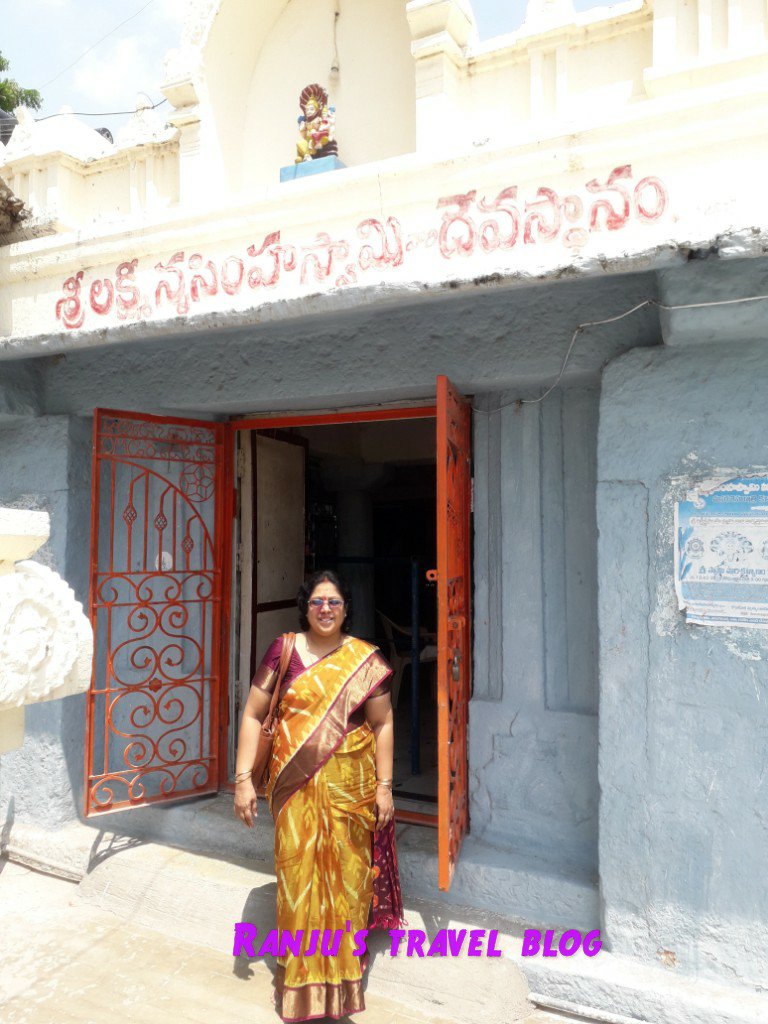
Sri Vyagara Narasimha swamy temple Agripalli

This is a Hill temple and a cluster of 3 temples . Sri Vyagara Narasimha Swamy temple at the foot of the hill .

Sri Shobanachala Lakshmi Narasimha Swamy temple at the Hill and Sri Achanteswara Swamy (Lord Shiva) temple at even more top of it .

Sri Vyagara Lakshmi Narasimhar Swamy is in Agripalli. It is 25kms from Vijayawada. This temple is dedicated to Lakshmi Narasimha Swamy. Here Lakshmi Narasimha Swamy is also known Sri Vyagra Narasimha Swamy. Vyagra means tiger in telugu here instead of lion the Lord Narasimhar has a tiger’s face . This is the foot hill temple with 25 steps .

Sri Shobanachala Narasimha Swamy
This temple is on a hillock one has to climb about 750 steps to have the dharshan of the Lord .The main deity is Sri Shobanachala Lakshmi Narasimhar with his consort Goddess Rajalakshmi is an swayambu . Here the Lord is with a smiling face . Opposite to the main sanctum is Dwajasthambam in front of it Lord Hanuman temple and a mantap adjacent to the main sanctum. Only 10 people can enter inside the temple at a time .

As per legend Sri Mahavishnu and Sri Mahadeva were visiting the earth. It was evening time, when they were near this place. They were looking for a place to stay over for the night. They saw this place among the mountains and thick green forest. They were impressed with the scenic beauty and the tranquility of the place. They decided to spend the night in the scenic and peaceful environment. Sri Mahavishnu wanted to perform evening sandhya vandanam and requested Sri Mahadeva to find a suitable place for their stay. Sri Mahadeva, after searching for a while, found a nice place on the top of the mountain and settled down there, forgetting to inform Sri Maha Vishnu. Sri Maha Vishnu waited for some time for Sri Maha Deva to return, but finding that Sri Maha Deva did not come back, he went in search of him. When he found that Sri Maha Deva settled down comfortably on the top of the mountain, Sri Maha Vishnu felt some what angry and thumped the head of Sri Maha Deva with his fist and cursed that no body will visit him without having the Darshan of self (Sri Maha Visnu). Saying this, Sri Maha Vishnu came down in two steps and settled down at the foot of the Mountain. Even now, one can notice the impression of the fingers on the top of the sacred Siva Lingam and the two large stone slabs (representing the imprint of the foot steps of the Lord). Lord Sri Maha Vishnu is known in this place as Sri Shobhanachala Swamy (Sri Lakshmi Narasimha Swamy) with Mother Sri Rajya Lakshmi. Lord Sri Maha Vishnu is considered here as Shobana or happy or shanta Murty (after pacification by Bhakta Prahlada).

One has to climb 100 more steps to have the dharshan of Lord Shiva named Achanteswara Swamy .

Sri Rameswaraswamy temple is positioned in Achanta, West Godavari district of Andhra Pradesh. Achanta also referred to as as Marthandapuram inside the past. The Shivalinga present in this temple is said to be Swayambhu (self-fashioned). Here Lord Shiva is referred to as as Achanteswara Swamy. This temple is having beautiful structure. There are sub-temples of Lord  Vighneswara Goddess Saraswathi and Saptamatrukalu inside the predominant temple . From the inscriptions on the wall’s of this temple, it’s far recognised that this temple changed into built at some point of the duration of Eastern Chalukyas . The Raja Gopura of this temple is maximum one in this area, which ripples the construction fashion of Chalukyas . There is 6 Shiva linga’s in the temple, which are  Lakshmaneswara lingam, Someswara lingam, Markandeya lingam, Bhimalingam, Skandalingam, and Indralingam.

The Pancha Narasimhar sthethram are Mangalagiri Vedadri Matapalli Vadapalli and Kethavaram in Vijaywada.
Since the roads were blocked due to some reasons our tour organizer took us to this temple .

Hope will get a chance to have the dharshan of Lord Narasimhar in Kethavaram.

Entrance of Vyagara Narasimha Swamy temple
Entrance of Sri Shobanachala Lakshmi Narasimha Swamy temple
Before the main sanctum and that grilled gate is the mantap
Steps of the hill temple took this pic just before climbing
On the way to Hill temple one could see Sri Vyagara Lakshmi Narasimha Swamy temple beneath

Sri Narasimhar temple Vadapalli

This is one of the Pancha Narasimhar kshetram in Andrapradesh. (Vedadri, Vadapalli, Mattapalli, Mangalagiri, Ketavaram)

The Vadapally Lakshmi Narasimhar temple is situated in Nalgonda district near the town of Miryalaguda, at the confluence of the River Krishna and Musi River. These two rivers very unusually come together in the shape of an “L”.

There are Puranic references to the history of Lord Narasimha’s appearance at Vadapalli. According to the Puranas, Vyasa Bhagavan, knowing the piousness of the place, meditated for a long time on the manifestation of Sri Narasimha Swamy. The Lord benedicted him by manifesting in His ferocious Ugra form.

Vyasa Bhagavan experienced Lord Narasimha at the moment when His breath was filled with tremendous anger, so he concluded that the Lord had come to him just after killing Hiranyakasipu. Therefore, he prayed to Sri Narasimha Swamy to manifest at Vadapalli in that Form only. Accordingly, Lord Narasimha swamy manifested there to bless the devotees and to alleviate their suffering.

Even now, it is said that the Deity breathes in out. The temple priests have arranged two lamps here. One lights near the face of the Lord and the other near the navel of the Lord the lamp near the face quiver frequently , as evidence of the fact that the Lord is continually breathing in and out. The second lamp, kept below, burns resolutely.

Sri Narasimha Swamy is believed to bless the devotees with health and prosperity who pray to him soulfully. The sacred river Krishna has a very prominent place in the history of our country.

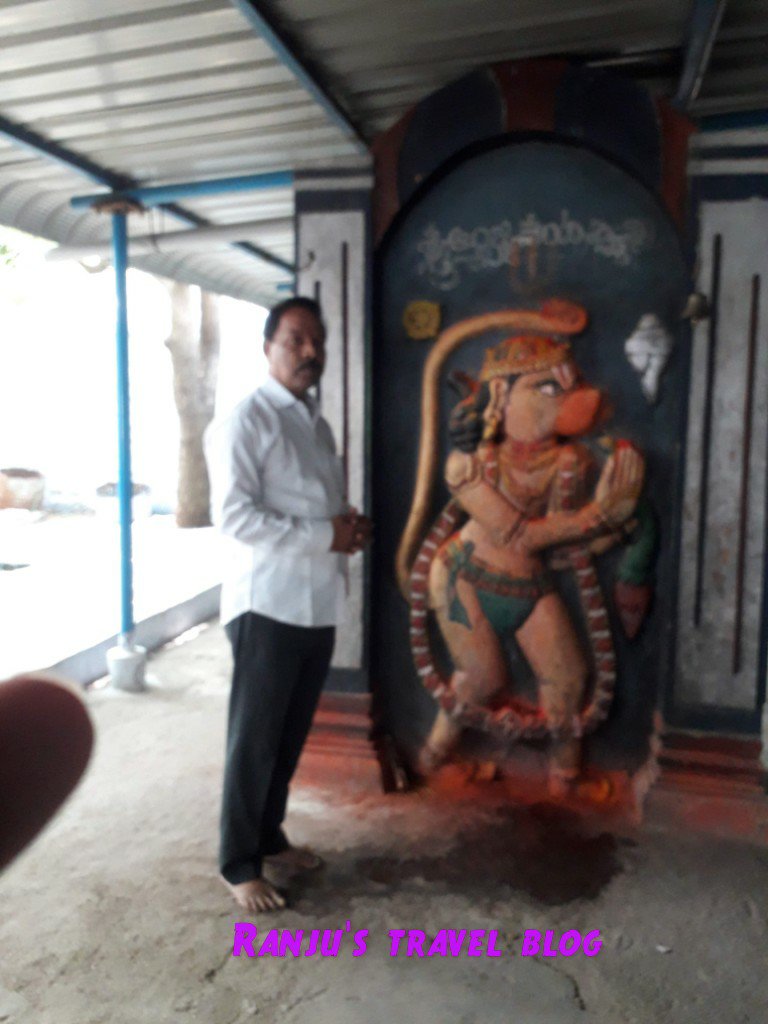
At the entrance and opposite to main sanctum is a seperate shrine for Lord Anjineyar and one at side when we come pradakshanam on the right side of the temple.

From outside the temple
Near the main entrance
Lord Anjineyar opposite to the main entrance
Lord Anjineyar right side of the temple
The main diety (source Facebook page)

Sri Lakshmi Narasimhar temple Matapalli

Posted inPancha Narasimhar sthethram AP

It is located in Mattapalli or Mattapalli village in the Nalgonda district and is 25 km from the Huzurnagar Taluk on the banks of River Krishna . It is regarded as one of the Pancha Narasimha Kshetras. The temple houses the triple deities of Sri Yogananda Lakshmi Narasimha Swami, Sri Rajyalakshmi Thaayar and Sri Chenchu Lakshmi Thaayar.

Several Telangana temples dedicated to Lord Narasimha Swamy are housed within caves. Similarly the Yoga Narasimha Swamy Temple is also located within a cave. The west facing Sanctum Sanctorum is accessed by a narrow passageway.

We stayed in mukoor Lakshmi Narasimhacharyas ashram as well as koshala it was a circular halled temple with the main deity as Lakshmi Narasimhar and Chakrathalwar and beautiful carvings on either side of the pragharam . Surrounded by rooms all 4 sides .

There is a rock above the door to the sanctum sanctorum. On it is the sculptured motif of Gaja Lakshmi with two elephants raising their trunks upwards on either side. The sanctum is a cave. The roof of the Garbhagriha is a big rock.

Inside the Garbagriha there are brass idols of Sankh Chakra and many Alwars . We went early by 6am as we did thirumanjanam , Rs 250 per couple .

The main hall housing the deity known as the mukha mantapam is huge measuring 24 feet x 45 feet. The hall comprises 21 pillars holding up a cement roof. A similar hall, though smaller is also present above the north door comprising 5 pillars.

The temple houses some of the finest specimens of rock sculpture. One such beautiful piece of art is found crowning the main door of the sanctum sanctorum displaying the motif of Gaja Lakshmi. It shows two elephants with their trunks raised up facing each other. Another one is found above the Garba Griha shows Lord Narasimha seated in the yogic posture of Padmasana. He is shown holding the Chakra in his upper right hand and Sankha in his upper left hand. His lower left hand is shown resting on his left knee. His lower right hand however is not visible. Yet another rock structure resembles the Divine serpent of Sesha. It appears as if the Serpent is spreading its hood over the Lord’s rock sculpture. This sculpture is about 1 foot in height.

Lord Sri Lakshmi Narasimha Swamy
The stone image of Lakshmi, the consort of Vishnu, is placed to the left of the rock sculpture. The Goddess is shown in a sitting posture on a lotus with Makuta the crown on her head and her upper hands holding lotus. Her lower hands are shown in the Abhaya and the Suchi posture. Beneath this is another image of Rajya Lakshmi that is installed in order to enable devotees offer their prayers to the goddess as the original idol of Goddess Lakhshmi is not made available to them.

A peculiarity of the Yoga Narsimha Swamy temple which distinguishes it from the other Telangana temples is the absence of a pradakshina path around the Sanctum sanctorum. Therefore in order to complete this ritual devotees circle the sacred pillars or the Dhwajasthambha. Alternatively, they can also circle around the stone image of Hanuman which faces the main deity.

It is believed those who do 36 pradhakshanam of this Dwajasthambam along with Lord Hanuman shrine in this temple the Lord fulfills their desires .

The Yoga Narasimha Swamy is located on the banks of the River Krishna. The temple premises provide steps which lead devotees to the River Krishna. The temple also houses the Ramanuja Kutam or the kitchen where the Naivedya is prepared.

The Narasaimha Swamy Temple is another beautiful structure of the Telangana temple architecture. It bears rock sculptures of gods and goddesses which are revered and worshipped by many ardent devotees. The temple premises receive huge crowds in the months of January and May during the time of Vykunta Ekadasi and Kalyana Mahotsva. Both these festivals are celebrated in a grandeur manner .On the banks of river KrishnaView from topWe reached by evening and did 36 pradakshanam circumbulating lord Hanuman along with the dwajasthambamThe main entrance of Matapalli temple early morning dharshan (thirumanjanam)Side entrance of Matapalli templeMukoor Lakshmi Narasimhacharyas ashramBeautiful carvings inside mukoor Lakshmi Narasimhacharyas ashramBeautiful carvings inside the temple of mukoor Lakshmi Narasimhacharyas ashram

Sri Narasimhar temple

This Temple is located on the banks of River Krishna at VEDADRI village in Krishna district of AP and at a distance of 80 km from Vijayawada and 10 Kms from Chillakallu on Vijayawada-Hyderabad National Highway. The nearest town is Jaggaiahpet at 12km.

This is one among the Pancha Narasimhar sthethram near Vijaywada.

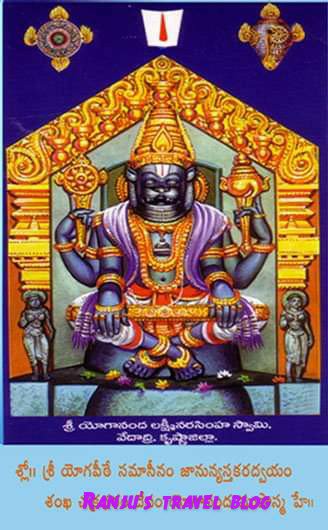
The Lord Narasimhar exists here in five forms as Jwala , Yoganandha, Veera , Saligrama and Lakshmi Narasimhar.

Lord Vishnu in His ‘Masthyavatar’ (fish) rescued Vedas from the demon Somakasura. The Vedapurush requested Him to reside on their heads. River Krishnaveni also wished to perform daily abhishekam to Him. Lord told them that their wishes will be fulfilled during ‘Narasimha avatar’ and asked Veda Purushas to remain in Krishna waters as Saligram till then and further assured them that He will stay with them as Panchamurthy.

On Killing Hiranyakasipu , Lord Vishnu self-manifested on Vedadri hill as JWALA NARASIMHA.

Later Lord Brahma installed SALIGRAMA NARASIMHA MURTHY on the SALIGRAMA mountain.

Later Sage Rishyasringa and others, in search of a suitable place for performing penance, heard Veda recitals in perfect swarms from the hill here, named it as ‘Vedadri’ and performed their penance here and having found in a cave a swayambhu YOGANANDA NARASIMHA , installed it here.


Again at Garuda’s request Lord self-manifested as VEERA NARASIMHA on the top of Garudadri hills, 5km east of Vedadri .

As per the prayers of Vanadevatha, the Lord is pervading the mountains as LAKSHMI NARASIMHA MURTHY.

Must be carefull as there are lot of monkeys if u are taking eatables fruits and flowers.

Near the car parking area is the access to Krishna river , we spent almost an hour as we went by evening . Mountains on one side and foot hill Vedadri temple and Krishna river at the back of the temple lovely ambience.

In front of vedadri temple
Outside side view of the temple
Yoga Narasimhar
Lakshmi Narasimhar
Design a site like this with WordPress.com
Get started