SWAMIMALAI MURUGAN TEMPLE
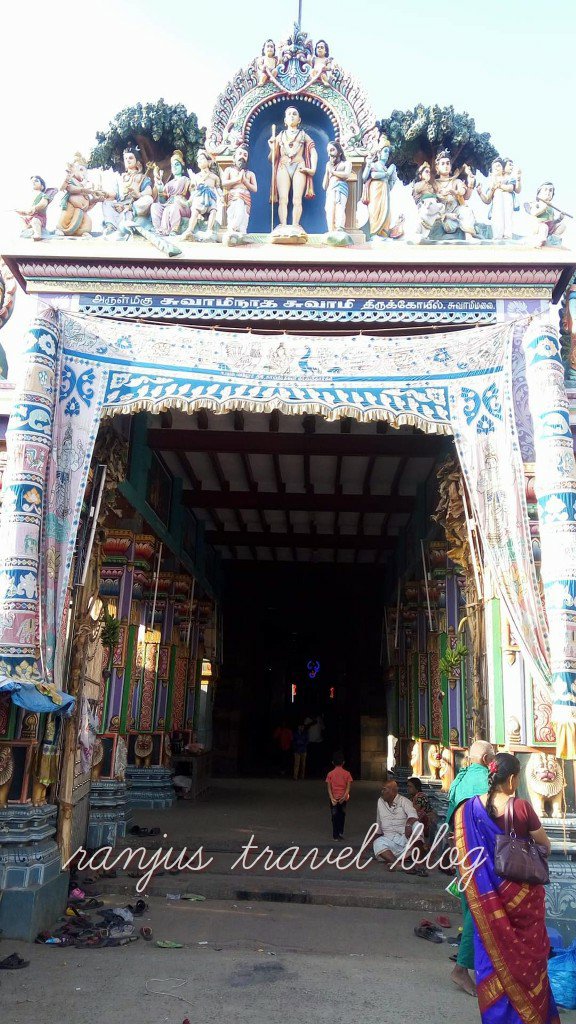
Swamimalai Swaminathaswamy Temple is a Hindu temple dedicated to god Murugan. It is located in Swamimalai, 5 km from Kumbakonam, on the banks of a tributary of river Cauvery, 250 km from Chennai, the capital of Tamil Nadu, India.
The temple is one of the six holy shrines of Murugan called Arupadaiveedu.
The shrine of the presiding deity, Swaminathaswamy is located at the top of 60 ft (18 m) hillock and the shrine of his mother Meenakshi (Parvathi) and father Shiva (Sundareswarar) is located downhill.
The deities of the Tamil years are praying to Lord Muruga in the form of steps. Hence, the Padi Puja (puja for the steps) is conducted on Tamil and English New Year days with coconuts, fruits and singing hymns.The temple has three gopuram (gateway towers), three precincts and sixty steps and each one is named after the sixty Tamil years.
The temple has six daily rituals at various times from 5:30 a.m. to 9 p.m, and three yearly festivals on its calendar. The annual Vaikasi Visagam festival is attended by thousands of devotees from far and near.
As per Hindu legend, Muruga, the son of Shiva, extolled the meaning of the Pranava Mantra (OM) to his father at this place and hence attained the name Swaminathaswamy. The temple is believed to be in existence from the Sangam period from 2nd century BC and was believed to have been modified by Parantaka Chola I
Swami malai is also called as “Kattu malai ” as it is a artificially made Hill .
As per Hindu legend, Brahma, the Hindu god of creation, disrespected Muruga (the son of Shiva) at the time of visiting Mount Kailash, the abode of Shiva. The child Muruga got angry with Brahma and asked him how he was creating living beings. Brahma said that he was creating living beings with the help of the Vedas (Hindu scriptures). On hearing the reply, Muruga asked Brahma to recite the texts from Vedas. Brahma started to recite the text with the holy word called Pranava Mantra, “Om”. At that time Muruga stopped Brahma and asked him to explain the meaning of the Pranava Mantra. Brahma could not reply and hence Muruga knocked Brahma on his forehead with his clenched fists and punished him with imprisonment.
Muruga took up the role of the creator. The Devas (celestial deities) were surprised by the absence of Brahma and they requested Vishnu to negotiate with Muruga to release Brahma. Vishnu could not help and as the last resort, Shiva went to the rescue of Brahma. Shiva came to Muruga and asked him to release Brahma from imprisonment. Muruga refused to release him stating Brahma was unaware of the meaning of the Pranava Mantra (Om). Shiva asked Muruga to explain the meaning and Muruga extolled to Shiva the meaning of the Pranava Mantra. Shiva behaved like a student to a teacher, listening with rapt attention from his son, giving Muruga the name “Thagappan Swami”. The meaning of this name is “The Teacher of His Father Lord Shiva”. Following the legend, the shrine of the son Muruga is atop the hillock, while the father Shiva’s shrine is located at the basement.


 Ranjus travel blog